


Substack can become a real source of income, but it works best if you treat it as a long-term content platform rather than a way to make money quickly. In this guide we break down the main ways authors earn, explain how to grow your newsletter, and share tips on conveniently organizing work with multiple Substack accounts as the workload increases.
If you’ve recently talked to authors, coaches, or people who run newsletters, you’ve almost certainly heard about Substack more than once.
- “It’s the easiest way to build an audience.”
- “You can start for free.”
- “You can make money on it without complicating your life.”
- And, honestly, there’s some truth in that.
Substack is great for those who want to publish content regularly, build trust with readers, and turn their materials into income. The platform is simple, flexible, and easy to figure out. For many authors it’s a way to both grow an audience and start earning at the same time.
That’s exactly what this guide is about. We’ll look at what makes Substack strong, how authors grow and earn with it, and how you can fit it into a simple content strategy.
💡What is Substack?
Substack is a tool for publishing newsletters: authors use it to send their texts straight to subscribers’ inboxes. Simply put, it’s both a blog and email delivery in one place, without the complexity you often get on traditional marketing platforms.
The service is built for consistency and long-form writing, not for automation or sales funnels. You write, you send — and gradually build a relationship with readers. That simplicity is exactly what attracts authors. You can start for free, there’s a built-in recommendation system, and authors don’t need to set up their own email infrastructure — the path to readers is already there.
Substack also has a community feature — Substack Notes: it lets authors communicate, stay visible, and attract attention not only through their newsletter.
⭐️Is it true you can make money on Substack?
Yes, you can make money on Substack, but in reality the numbers are usually more modest than the flashy headlines promise. Many authors first build a small but loyal audience, and only a few of them reach noticeable income from paid subscriptions. This means that writing skill alone is not enough. Readers may genuinely love your texts — and still not be ready to pay for them. Substack rewards those who clearly understand their niche, consistently publish content, and create materials that people actually value.
📢Substack monetization
Here’s a simple example of how it can look in practice. Suppose a newsletter has 2,000 subscribers and the conversion to paid subscriptions is 1.5%. That gives 30 paid readers. At $7 per month the income will be roughly $210 per month before fees. If the audience grows to 8,000 subscribers and conversion improves to 2.5%, there will already be 200 paid subscribers. At $9 per month the monthly income will come out to around $1,800 — also before fees. Substack takes 10% of paid subscriptions, plus there are Stripe payment processing fees, but even accounting for that the platform can become a perfectly reliable way to earn from content.
📢How to make money on Substack?
There is no single way to earn on Substack. Most authors combine several income streams at once — and the best model depends on what kind of content they make, how much trust they’ve already built with the audience, and what they want to sell: access to materials, their attention, or expert knowledge.
⚠️Paid subscriptions
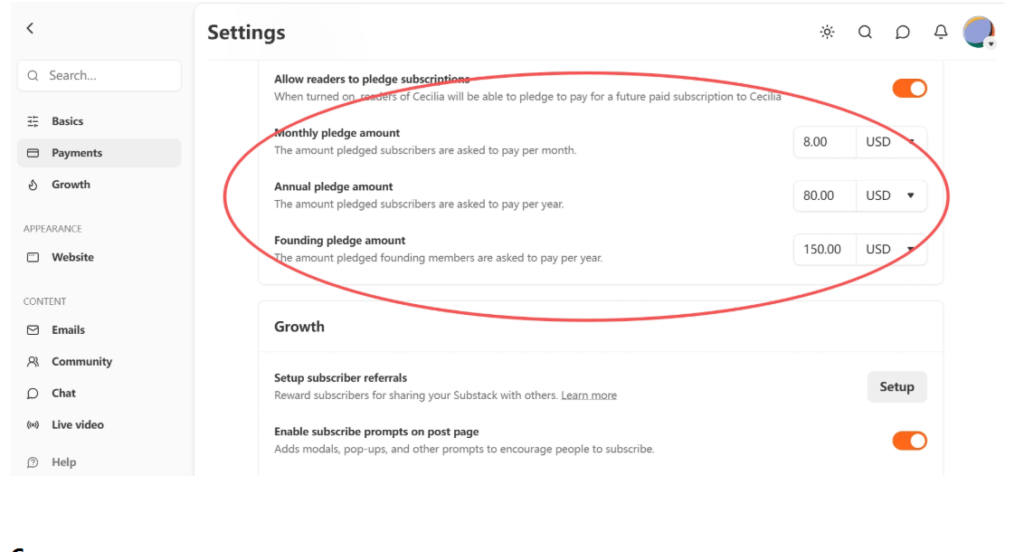
This is the most common monetization model on Substack. Authors publish free content to build an audience, while deeper analysis, exclusive posts, or special updates are reserved for paid subscribers. This approach works best when the paid part really delivers extra value, not just puts a regular post behind a paywall. If your content doesn’t have a clear premium component, this model is unlikely to be effective.
⚠️Sponsorship
Some authors sell ad placements or sponsored integrations in their newsletter. This usually works well when you already have an established audience and a clearly defined niche: sponsors want to reach exactly those readers who could become their customers. It’s a solid option, especially for authors with a mid-sized audience, but rarely the best starting strategy if newsletter traffic is still small or unstable. Sponsorship also works better when the audience trusts your recommendations and you don’t promote everything under the sun.
⚠️Affiliate marketing
This is about promoting products or services: you earn a commission when readers buy through your link. This method suits authors who review tools, share resource roundups, or publish materials that help readers make decisions. If your newsletter is, for example, roundups with clear purchase intent, affiliates will fit well. But if you mostly write opinion pieces or cover topics that have nothing to do with any products, affiliate marketing will bring little benefit. The key is to recommend not what pays a commission, but what will actually suit your audience.
⚠️Digital products
Digital products include templates, guides, e-books, workshop recordings, reports, and so on. This is an excellent model for Substack: first you build trust through the newsletter, then you offer a product that solves a specific reader “pain.” This approach fits well for authors who already have their own methodology, framework, or repeatable process that can be sold. It’s less appropriate if you’re still finding your style or the audience doesn’t yet see you as an expert offering practical solutions.
⚠️Consulting or coaching
Many experts use Substack to sell consultations and coaching. The newsletter here works as a way to earn trust: readers already understand how you think, what experience you have, and what approach you use — long before they book a call or buy anything from you. This is especially effective for experts, founders, executives, and coaches who want to convert attention into higher-ticket offers. If your content is too general or there’s no clear connection between what you write about and the services you sell, this approach will work less well.
⚠️Services or online store
If you run a service business or have an e-commerce brand, Substack can also be useful — provided the newsletter helps educate subscribers and/or warm them up (or retain them as customers). For example, a brand can use Substack to share expert opinions, show behind-the-scenes content, or provide extra useful material that motivates customers to come back between purchases. If your business is built on relationships and regular audience attention, this model can work great. But if you need segmented funnels or more complex marketing, Substack won’t be the ideal solution.
Substack Growth Boost: Subscribers, Likes, Comments
🎯Types of authors on Substack: different monetization paths
Judging by the materials studied, not every Substack author should monetize content the same way. The best path depends on what kind of content you make and what value the audience is willing to pay for.
Independent experts usually earn best from consulting, courses, or selling their expertise. Media-style authors typically focus on paid subscriptions and sponsorship. Brand accounts most often get the maximum benefit from product education, lead generation, and building trust with customers.
| Author type | Typical subscriber ceiling | Best monetization path | Conversion effectiveness |
|---|---|---|---|
| Independent experts | 10–30 thousand | Consulting, courses, premium expertise | High |
| Media-style authors | 50–200 thousand | Paid subscriptions, sponsorship | Medium |
| Brand accounts | 20–100 thousand | Product education, leads, conversions | High |
The main takeaway is simple: every author type has its own audience ceiling, its own income model, and its own understanding of what counts as “success.”
📍How to start earning on Substack
Ready to try? Here’s a simple step-by-step plan to get started.
- Create a Substack account
Sign up and choose a name for your newsletter — it should fit your niche. Make it simple and clear: this is the first thing readers will see. - Choose a niche.
Decide on a topic that people are genuinely interested in — one they will be willing to read and even pay for. The best niches usually solve a problem, provide useful insights, or offer a sharp, clear point of view. - Publish free content first.
Give people a reason to trust you. Free posts will help you find your style, test what works, and show readers why they should subscribe to your newsletter. - Grow your subscriber base.
Share your newsletter where your audience already spends time. Social media, podcast mentions, your website — anywhere people already know and read you.
📍How to grow your Substack newsletter faster
Growth on Substack is not about publishing a lot of content for the sake of virality. It’s better to do less, but show up where the audience is already listening to you. The platform has several tools for this, and most often the best results come from combining them rather than betting on just one method.
⚠️Substack growth strategies
⚠️Optimize for Google search
Write about topics people actually search for, and make headlines clear for both readers and search engines. Put the keyword in the title, give the main idea right in the first paragraph, break long posts into blocks with H2 and H3 subheadings, spell out important terms in full, and at the end add a “Read also” block with links to your similar articles. This way every newsletter issue becomes a long-term traffic source: it will keep bringing readers even long after publication.
⚠️Use Substack Notes
With Notes, share short thoughts, reactions, or excerpts from your longer posts. This helps you stay visible between newsletters and gives new readers a chance to get to know your style. The mistake is using Notes only as a place to advertise a new issue. It’s much better when you actually participate in the discussion rather than just promoting yourself.
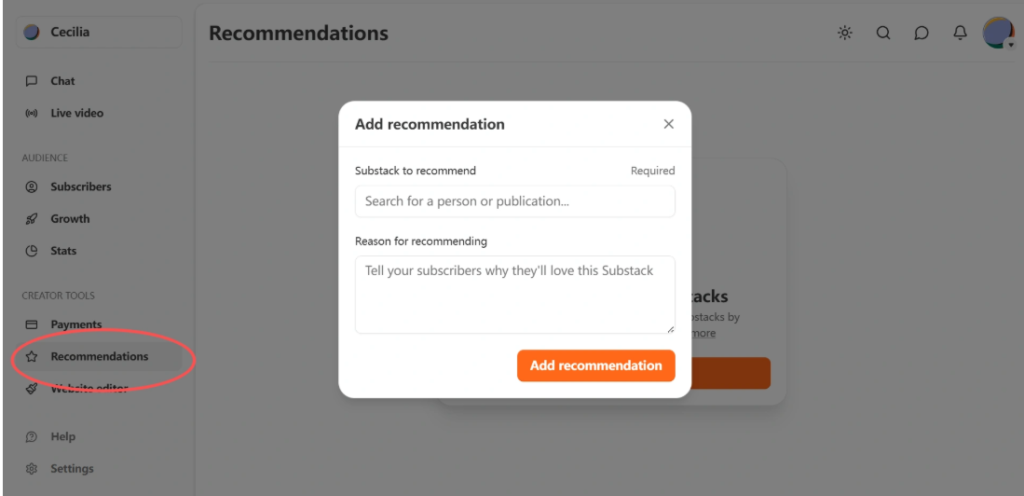
⚠️Use recommendations
Recommend newsletters that will genuinely suit your audience, and build relationships with authors who can recommend you in return. The goal is to create a small network of thematically close publications that share readers with each other. This works best when topics strongly overlap: then audience match delivers much higher conversion. Don’t recommend completely unrelated publications just to fill space — weak relevance means weak traffic too.
⚠️Promote on social media
Share Substack content on the platforms where your audience already spends time. One post can be turned into a thread, a short video, a screenshot, or a caption that leads back to your newsletter.
⚠️Repackage content
Turn one idea into several different formats instead of inventing something new every time. A newsletter issue can become a social media post, a short thread, a quote card, or a podcast topic. The mistake is trying to force every piece of content into every possible format. Repackaging works better when you adapt the message to the specific platform rather than copying the text word for word.
🔥Best practices for earning on Substack
If you want Substack to become a real source of income, the most important thing is consistency. People subscribe because they want to hear a stable author voice, a clear point of view, and receive content they can return to. That’s why a reliable publishing schedule is more important than trying to catch rare spikes of interest.
It’s useful to first build trust and only then ask people to pay. The strongest Substack newsletters first give readers enough value for free — and only then introduce paid content when the audience already understands what it’s worth supporting the author for.
When you add paid materials, it’s important that they feel like a real upgrade. Exclusive posts, deeper analysis of topics, premium reports, or practical takeaways work well — they give the reader a clear reason to switch from a free subscription to a paid one.
An annual subscription can also be a plus, especially if you want more stable income. It reduces subscriber churn, rewards those who are already loyal, and gives you a stronger base for long-term growth.
Collaboration matters too. Working with other authors, mutual newsletter recommendations, and audience exchange help you grow faster — and not depend only on your own subscriber list.
Another long-term advantage is SEO. If you write about topics people actually search for, your posts will bring new readers even long after publication. This way Substack becomes not just a newsletter tool, but also a channel of continuous traffic.
And finally, focus on the quality of the subscriber list, not just the quantity. A small but engaged audience that is genuinely interested in your content is usually more valuable than a large list where emails are barely opened and there’s almost no interaction with the materials.
🔥Why is Boost Like the best platform for promoting Substack?
Marketplace Boost Like helps you get your Substack off to a faster start by giving you an initial boost in key metrics. Once you have subscribers, likes, and comments, your posts start appearing more often in recommendations and Notes, and your newsletter looks more active. Substack’s algorithms are more likely to showcase content that already has some engagement, so those first few hundred real subscribers and reactions significantly accelerate organic growth.
This works especially well at the start or when growth has stalled. Instead of waiting months for your audience to grow on its own, you gain visibility right away. People are more likely to open emails and subscribe when they see that others are already reading and discussing the newsletter. As a result, you’ll reach a steady influx of new readers faster and can launch a paid subscription or other monetization methods sooner.
📍Frequently asked questions
📍How much does Substack pay?
Substack does not pay a fixed amount. Your income depends on the size of the audience, the value of your content, and how many readers are willing to pay. Most often authors earn from paid subscriptions, and Substack takes 10% plus the payment system fee.
📍Is Substack free?
Yes, you can start on Substack for free. You only have to pay if you introduce paid subscriptions: then the platform takes its share of the revenue.
📍How often do you need to publish?
There is no ideal schedule, but consistency is more important than quantity. It’s better to release materials on a clear schedule — for example, once a week — than to write a lot for a while and then disappear for a long time.
📍Can you use Substack for email marketing?
Yes, but mainly for simple newsletters in the style of a news bulletin. If you need automation, segmentation, or multi-step email sequences, Substack is usually not the best option.
📍Should Substack be free or paid?
The optimal mix depends on your business goals. If the main task is reach, authority, or lead generation, it’s usually better to make the newsletter mostly free. If the primary goal is direct income from readers, paid content should deliver clear value: for example, deeper analysis, exclusive updates, or ready-to-use frameworks. In most cases free content helps people find you, and paid content works better when it genuinely feels like a step up.
📍Can you manage multiple Substack accounts?
Yes. If you run several publications, brands, or work with clients, it’s important to organize account work properly. This helps make the workflow more convenient and avoid confusion when logging into different profiles.
Products by Category


Substack Comments
Price range: $3.99 through $9.99Substack Followers
Price range: $4.99 through $39.99Substack Growth Boost: Subscribers, Likes, Comments
Price range: $44.99 through $87.99Substack Likes
Price range: $4.99 through $39.99Substack Recommends
Price range: $9.99 through $125.99Substack Restacks
Price range: $4.99 through $78.99Substack Subscribers
Price range: $18.99 through $149.99